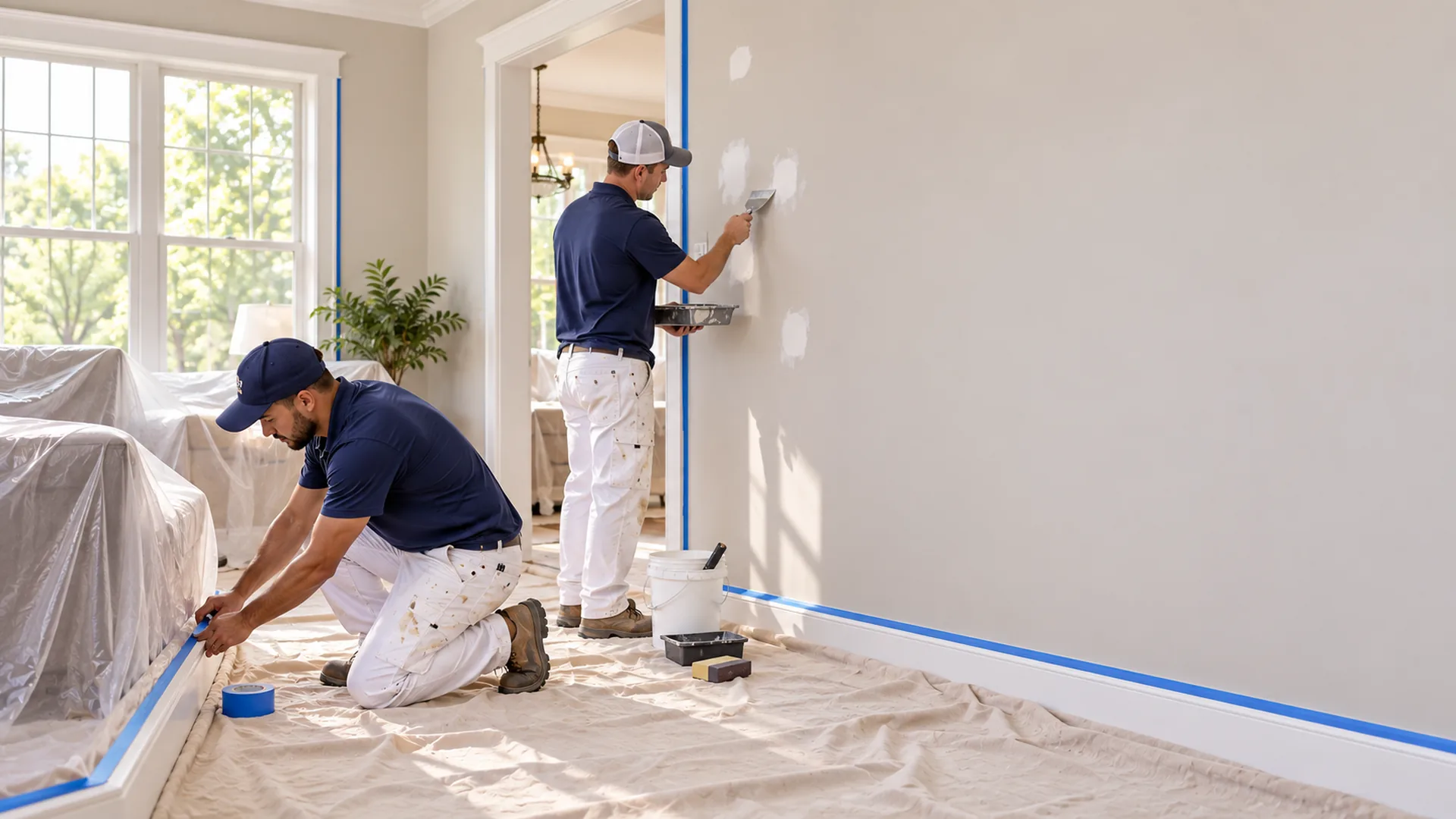
The visible coat is only one part of a painting project. Cleaning, scraping, sanding, filling, caulking and priming may all be needed, but the right combination depends on the existing surface. A responsible scope should be based on what the property actually needs, not a one-size-fits-all checklist. Understanding those choices also makes it easier to compare proposals on the work included, not price alone.
Preparation Starts With the Existing Surface
A painter should first identify the substrate and its condition. Drywall, plaster, wood trim, siding, masonry and metal each behave differently. The age and type of the current coating also affect what can be applied next.
During a walkthrough, point out recurring cracks, previous patches, stains, loose coatings and areas that have been difficult to maintain. This context helps distinguish ordinary wear from a condition that needs repair or investigation before painting.
Cleaning Removes Material That Blocks Adhesion
Dust, grease, chalking, dirt and other residue can prevent a new coating from bonding. Interior preparation may involve targeted cleaning in kitchens, bathrooms, entryways and frequently handled areas. Exterior preparation may require washing appropriate surfaces and allowing enough drying time before the next step.
Cleaning methods should suit the surface. Excessive pressure or moisture can damage some materials, so more force is not automatically better.
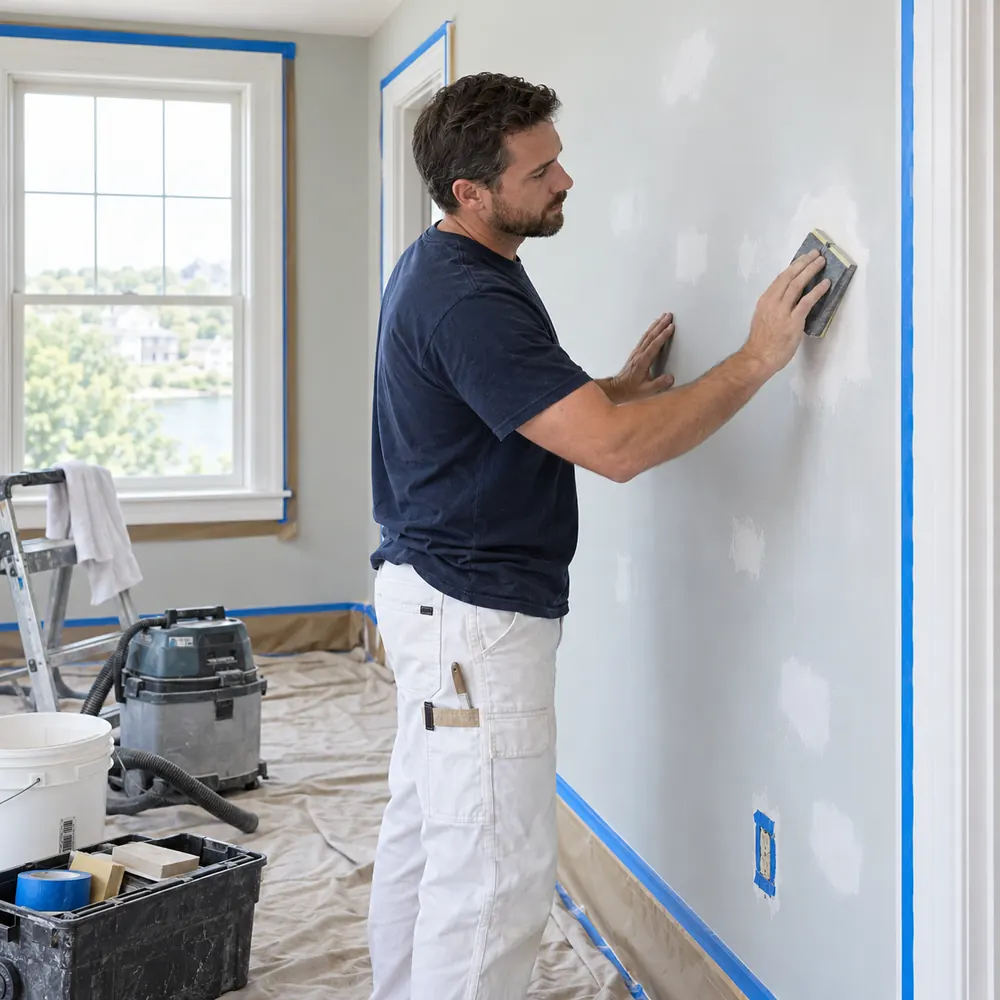
Scraping and Sanding Create a Sound Edge
Loose or flaking paint must be removed to a stable edge. Scraping is often followed by sanding where the surface and coating allow it. The goal is not to strip every property to bare material. It is to remove failure, smooth transitions and create a suitable surface for the specified coating system.
Older properties may require additional caution. If the age or history of a coating raises a concern about lead-based paint or another hazardous material, appropriate testing and work practices may be required before disturbance.
Filling, Patching and Caulking Have Different Jobs
Small holes and shallow surface damage may be filled or patched. Open trim joints may need caulk. Larger movement cracks, soft wood, damaged drywall or recurring settlement may need repair beyond ordinary painting preparation.
A useful proposal should explain what preparation is included and identify visible conditions that are excluded or need separate attention. This protects both the property owner and the painting team from vague expectations.
Primer Is Chosen for a Reason
Primer may be used on bare material, repaired areas, difficult stains, porous surfaces or when the new finish needs help bonding to the existing coating. It is not always necessary to prime every square foot. The primer type and placement should respond to the surface, not simply add another step.
Color changes can also affect the plan. A dramatic change from dark to light, or from light to a deep color, may require a specific base or additional coats to achieve an even appearance.
Protection and Access Are Part of Preparation
Preparation also includes protecting what will not be painted. Floors, furniture, fixtures, landscaping and nearby surfaces should be covered or moved as the project requires. Interior routes and exterior access need enough room for safe, orderly work.
Discuss occupied rooms, tenants, staff, pets and business hours before the start date. A clear sequence can reduce disruption without rushing necessary surface work.
Ask for a Surface-Specific Painting Plan
The best preparation plan is easy to understand and tied to the property in front of you. Eastern Iowa Painting can review visible surface conditions and explain the practical steps included before coating. Read about our painting preparation services, browse our painting services, or tell us about the surfaces you want repainted.